Start With $100,000 on Paper. Build Skills You Can Check.
Inside the three parts of Paperboi that turn daily calls into a record you can learn from: the portfolio, the Journal, and the Pattern Library, plus the Academy that teaches the setups.
Practice has a quiet problem. Most of it leaves no record.
You make a call on a chart. It works or it does not. A week later, you remember the wins clearly and the losses vaguely. You make the same mistake again, because nothing wrote the first one down.
You cannot improve what you do not track.
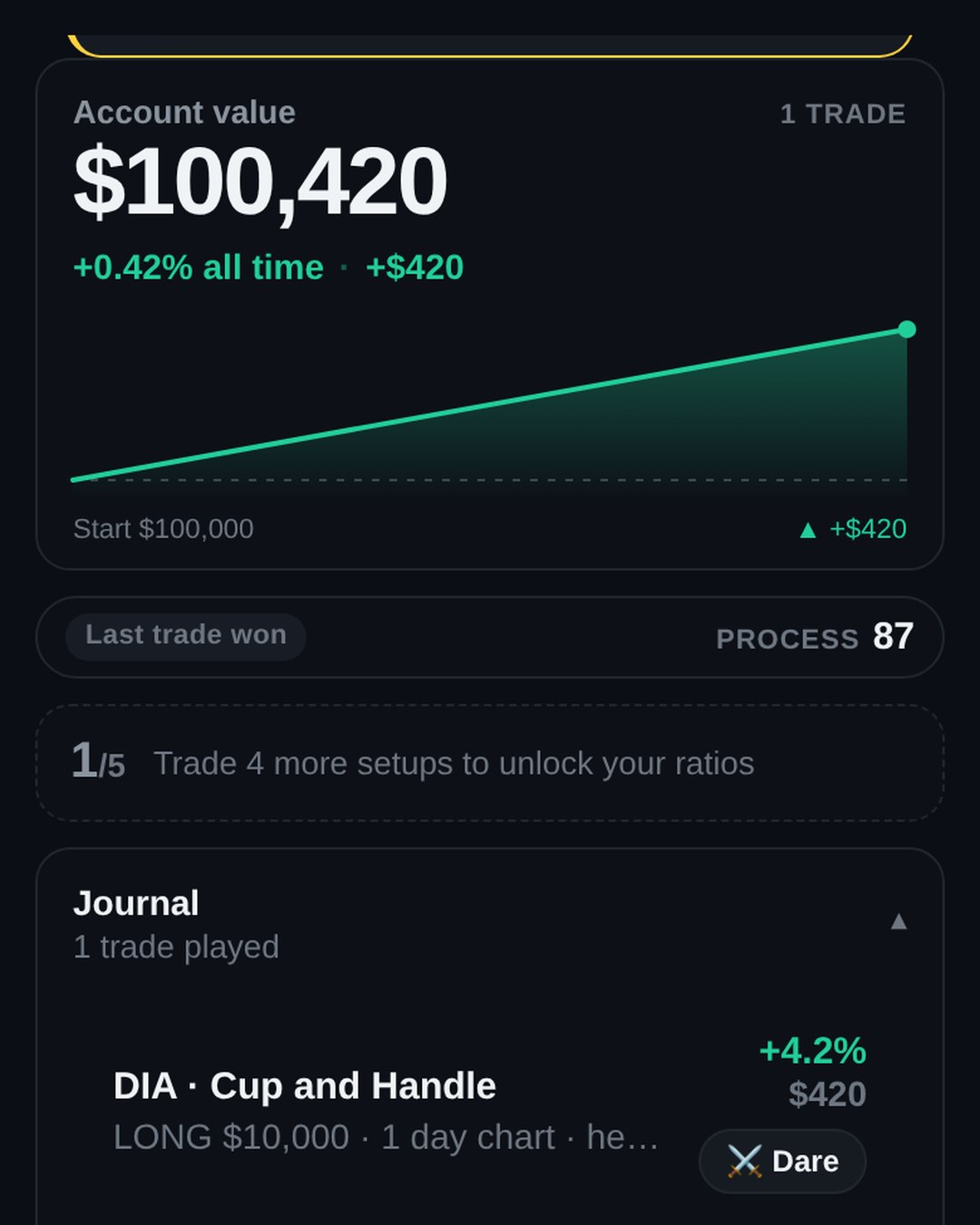
Paperboi starts you with a paper balance of $100,000. Your calls run against that balance, so results are measured the way a real account measures them: in percent and in dollars. A careless call costs you paper money. It stings a little, and it should. It just never touches your real money.
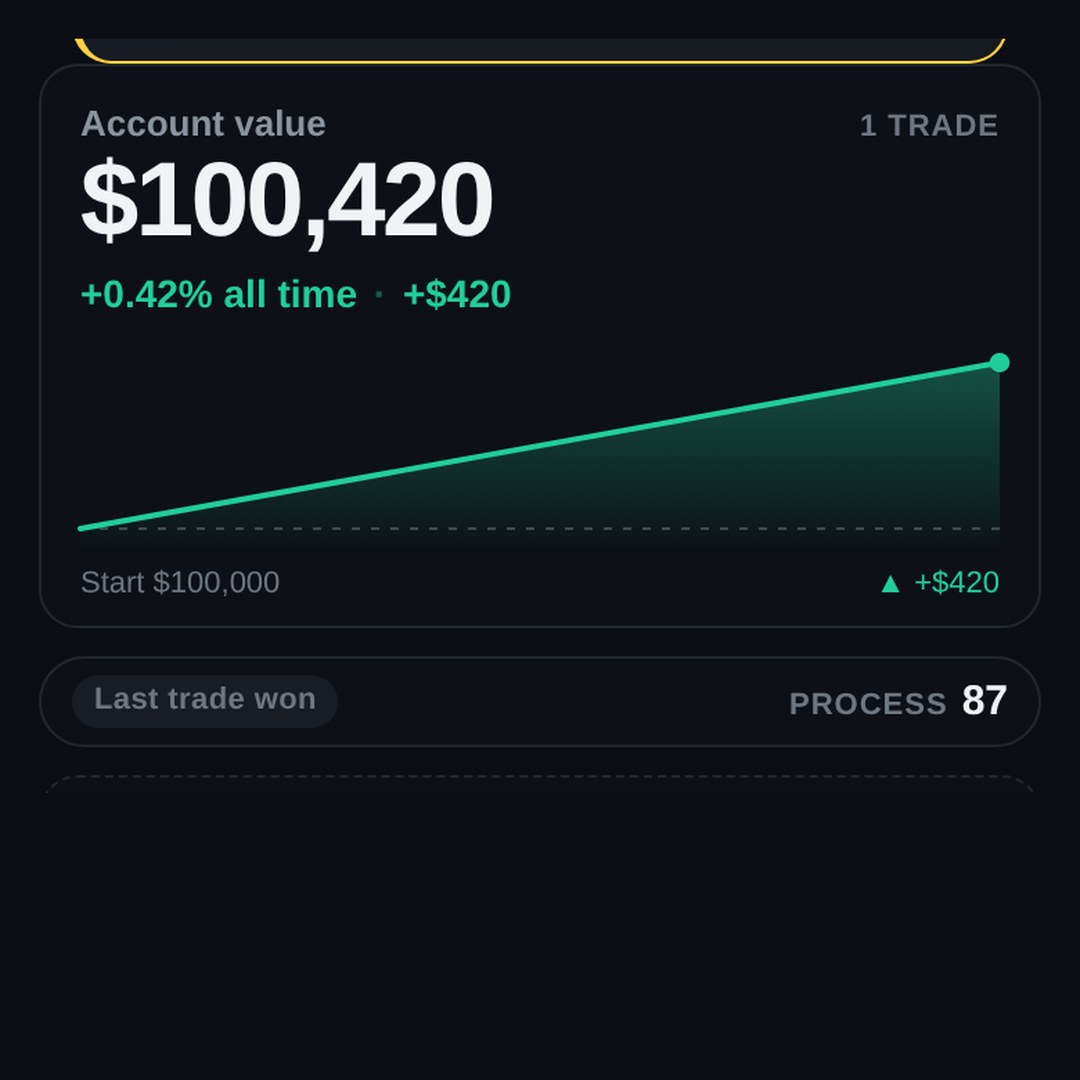
That balance is the first of three tools that make your practice add up.
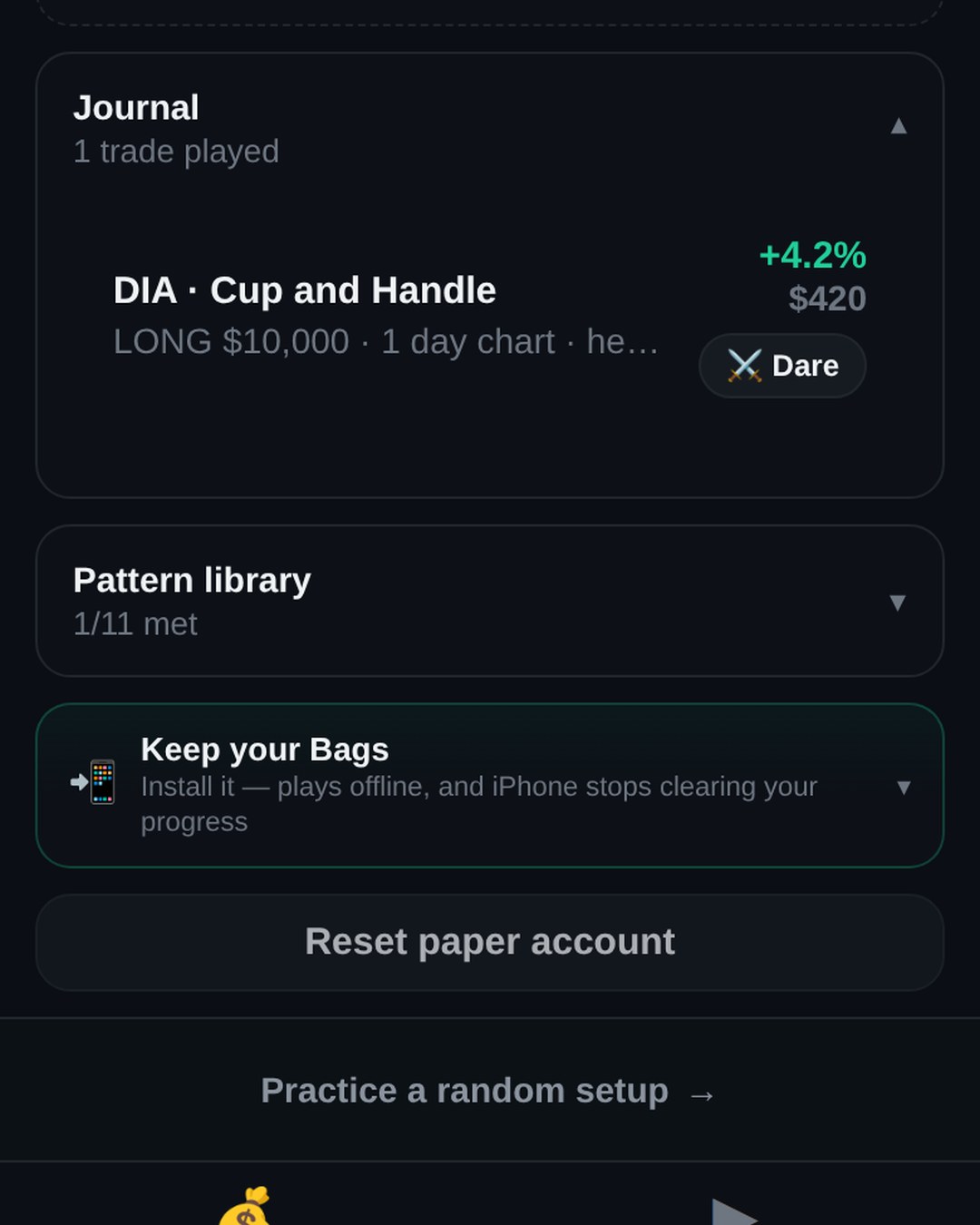
The second is the Journal. Every trade you play in Paperboi is written into your Journal with its result. Not your memory of the trade. The trade itself, with the percent and the dollars attached.
Open it after a month and you see your real history. Which setups you called well. Which ones keep beating you. Most traders are surprised by their own record, and that surprise is where the learning starts.
The third is the Pattern Library. As you play, the library counts the patterns you have met, one by one.
For each pattern, it also shows what that pattern actually did across real historical setups. How often it reached its measured move. What the average move was. No opinion, just the record of the sample.
That gives you a baseline. The pattern itself, played with no judgment at all, produced a certain result over many real charts. Your job is to beat that baseline with your reading. When your Journal numbers rise above the library baseline on a pattern, you are not guessing that you improved. You can see it.
Then there is the Academy, for the lessons behind all of this. It has 35 lessons, and each one teaches a single idea directly on a real chart. Short cards, one rule at a time, nothing long to sit through.
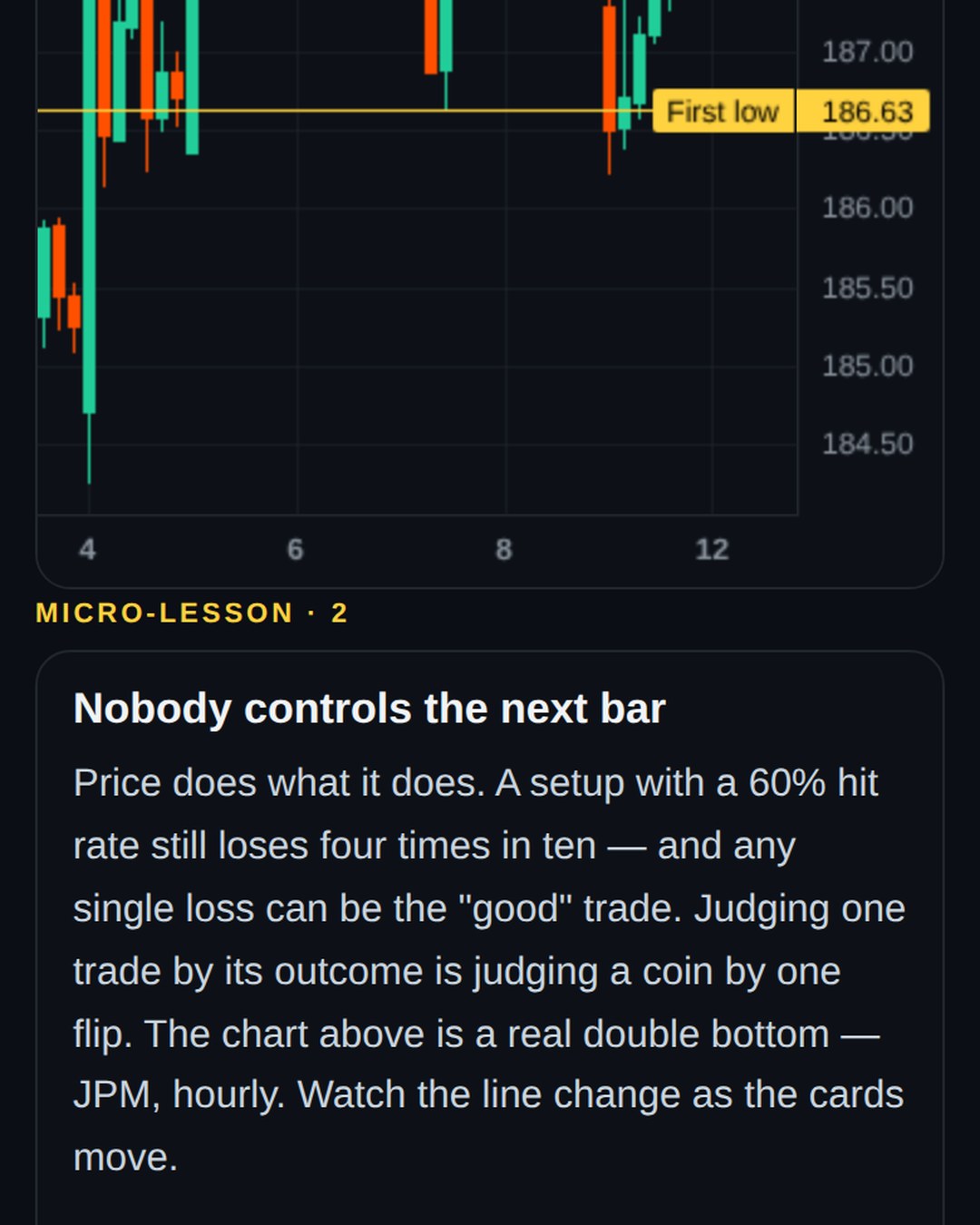
The lessons also cover the part most courses skip: the setups that fail. A breakout that dies. A pattern that never triggers. In the Academy, sitting out a bad setup earns full credit, because in real trading that is often the best trade of the day.
The Academy costs $19.99, one time. The game, the Journal, and the Pattern Library are free.
Put together, the design is simple. A balance that makes results real. A Journal that remembers what you did. A library that shows what the patterns did. Lessons that explain why.
That is how a two-minute daily game becomes training instead of entertainment.
Paperboi is the step before real trading. Practice here first. Trade real money when you are ready.
Play today's chart free: https://paperboi.pages.dev